

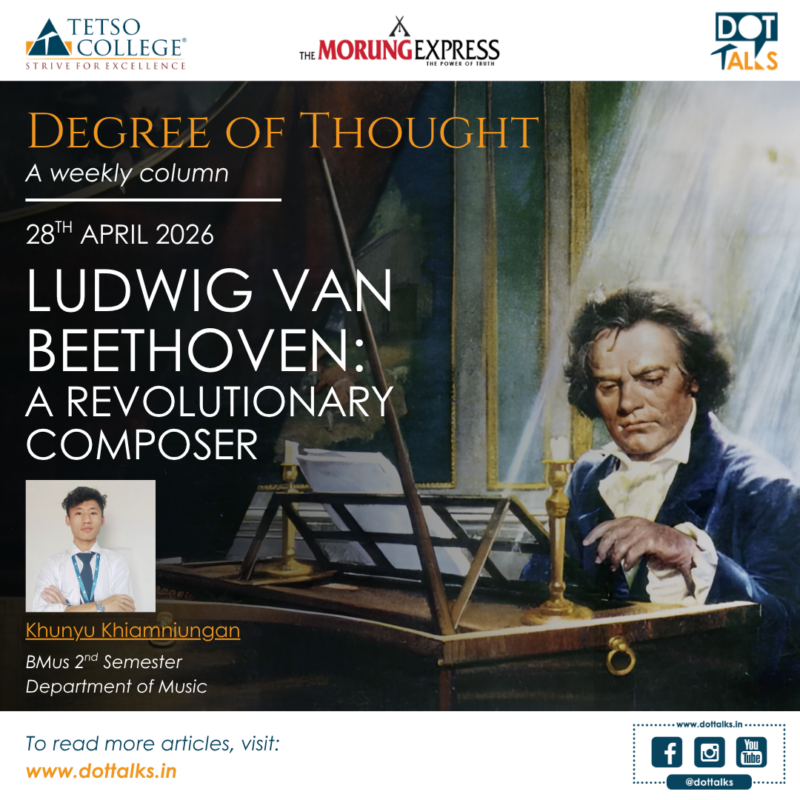
Ludwig van Beethoven stands as one of the most influential composers in the history of Western classical music. Born on December 16, 1770, in Bonn, Germany. Beethoven’s life and work bridged the transition between the Classical and Romantic eras. His compositions not only expanded musical forms but also expressed profound emotion and individuality, making him a central figure in the evolution of music.
Beethoven was born into a musical family. His father, Johann van Beethoven, was a singer and instrumentalist who recognised his son’s potential at an early age. Determined to turn young Beethoven into a prodigy like Wolfgang Amadeus Mozart, Johann pushed him rigorously, often harshly. Beethoven gave his first public performance at the age of seven and soon gained a reputation as a talented pianist.
In his early twenties, Beethoven moved to Vienna, the musical capital of Europe. There, he studied under renowned composers, including Joseph Haydn. Vienna provided him with opportunities to perform, compose, and gain the patronage of aristocrats. His early works reflect the Classical style of Haydn and Mozart, characterised by clarity, balance, and formal structure.
Beethoven’s music is often divided into three periods;
- The early period (up to 1802) shows strong influence from Mozart and Haydn. His compositions, such as early piano sonatas and symphonies, follow Classical traditions but already hint at his unique voice.
- The middle period, also known as the “Heroic” period, marks a turning point in Beethoven’s career. During this time, he composed some of his most famous works, including the Eroica Symphony (Symphony No. 3). These compositions are characterised by boldness, emotional depth, and innovative structures. Beethoven began to push the boundaries of musical form, expanding the length and complexity of symphonies and sonatas.
- The late period is marked by profound introspection and experimentation. Works from this time, including his late string quartets and piano sonatas, are complex and deeply expressive. They often challenge traditional forms and explore new harmonic and structural possibilities.
One of the most remarkable aspects of Beethoven’s life was his struggle with hearing loss. In his late twenties, he began to notice symptoms of deafness, which gradually worsened over time. For a musician, this was a devastating condition. Yet Beethoven did not give up. Instead, he continued to compose some of his greatest works even after he became almost completely deaf.
His determination is evident in the famous Heiligenstadt Testament, a letter in which he expressed his despair but also his resolve to continue living for his art. This personal struggle deeply influenced his music, adding emotional intensity and a sense of triumph over adversity. Beethoven’s body of work is vast and varied. He composed nine symphonies, five piano concertos, 32 piano sonatas, and numerous chamber works.
Among his most celebrated compositions is the Symphony No. 9, which includes the famous “Ode to Joy” chorus. This work was revolutionary in its use of vocal soloists and choir within a symphony. His Symphony No. 5, with its iconic four-note opening motif, is another masterpiece that symbolises fate and resilience.
Beethoven’s piano sonatas, such as the “Moonlight Sonata,” are also widely admired for their emotional depth and technical innovation. His string quartets, especially those from his late period, are considered some of the most profound works in chamber music.
Beethoven’s influence on music is immeasurable. He transformed the role of the composer from a servant of the aristocracy to an independent artist. His work inspired generations of composers, including Franz Schubert, Johannes Brahms, and Richard Wagner. His music also played a crucial role in the transition to the Romantic era, emphasising emotion, individuality, and expression. Beethoven’s ability to convey deep human experiences through music continues to resonate with audiences worldwide.
Ludwig van Beethoven remains a towering figure in the history of music. His life story is one of resilience, creativity, and transformation. Despite facing immense personal challenges, particularly his deafness, he created works of enduring beauty and power. His compositions continue to inspire musicians and listeners alike, proving that true artistry transcends limitations. Beethoven’s contribution is not just in his music but in his enduring message of perseverance and the triumph of the human spirit.
Degree of Thought is a weekly community column initiated by Tetso College in partnership with The Morung Express. Degree of Thought will delve into the social, cultural, political and educational issues around us. The views expressed here do not reflect the opinion of the institution. Tetso College is a NAAC Accredited UGC recognised Commerce and Arts College. The editorial team includes Chubamenla, Asst. Professor, Dept. of English and Rinsit Sareo, Asst. Manager, IT, Media & Communications.
For feedback or comments please email: dot@tetsocollege.org