

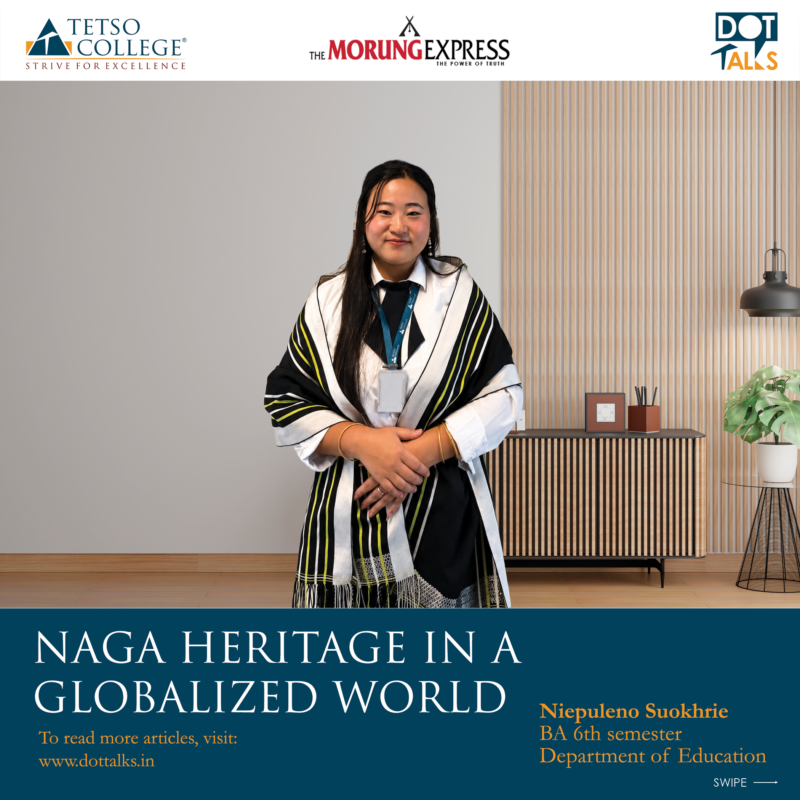
Culture is the soul of a people, carrying rich histories, values, traditions, and identities across generations. With the world becoming increasingly interconnected through globalization, many distinct cultures are at risk of being overshadowed by dominant global cultures. Among these is the rich cultural heritage of the Naga people, whose traditions, languages, and customs deserve to be preserved for future generations. Naga culture is distinguished by its language, traditions, dialects, vibrant attire, and ancestral practices. In this globalized world, with changing times, there is a need to preserve our own culture and traditions to keep them alive, as they form the foundation of our personal and societal identity. This involves striking a balance between embracing modernity and preserving indigenous languages, oral histories, and traditional practices.
Globalization connects people across countries and facilitates the exchange of ideas, technology, and opportunities. While these developments provide new means of documenting and promoting Naga culture, they also expose local traditions to increasing external influences that may contribute to cultural erosion. Although the Nagas possess a rich cultural heritage reflected in their languages, customs, attire, crafts, music, festivals, and traditional food, people today are increasingly influenced by other cultures through media, technology, and migration. These influences create new opportunities but also contribute to the gradual erosion of Naga culture and traditions. Therefore, preserving Naga culture and traditions is essential for future generations. Naga cultural elements serve as expressions of the community’s history, beliefs, and values, reinforcing a cultural identity sustained across generations. If these traditions are neglected, future generations may lose touch with their roots and cultural heritage.
An important reason why the Nagas should preserve their culture is that it strengthens their sense of identity and belonging. Culture helps people understand who they are and where they come from. The traditional practices, stories, and customs of the Nagas connect the young generation to their ancestors and further strengthen their community bonds. Thus, by preserving these traditions, the Nagas can maintain their unique identity while embracing and participating in the modern world.
Indigenous knowledge also forms an important part of the cultural heritage and everyday life of the Nagas. It includes traditional farming methods, oral histories, medicinal practices, social customs, and traditional crafts. These skills and knowledge have been passed down from ancestors and elders to younger generations through observation, storytelling, and practical experience. A key feature of Naga indigenous knowledge is its emphasis on living in harmony with nature. The Nagas’ traditional agricultural practices, including sustainable cultivation and natural resource conservation, reflect their deep understanding of the environment and contribute to biodiversity and ecological balance. Their indigenous knowledge, evident in traditional healing practices and the use of medicinal plants, embodies a profound understanding of local ecosystems while preserving cultural values, beliefs, and identity. However, modernization and globalization have weakened the transmission of this knowledge, making its documentation, preservation, and promotion essential for enabling younger generations to maintain strong connections to their cultural roots.
Naga festivals, arts, and crafts further enrich this vibrant cultural heritage. Traditional weaving, woodcarving, beadwork, and music showcase the creativity and skills of Naga culture. Festivals provide opportunities for people to come together, celebrate their heritage, and share their culture with others. Such cultural practices promote unity and pride for the Naga people. Preserving culture does not mean rejecting modernization; it means finding ways to balance tradition with progress. Modern technology can be used to document oral histories, promote local languages, and share cultural knowledge with a wider audience, for example, through NIEPA. Schools, families, and community organizations also play an important role in teaching younger and future generations about their cultural heritage. Traditional arts like hand-woven shawls, bamboo crafts, wood carvings, and beadwork show the creativity and skills of Naga artisans; thus, teaching these skills to young people can help preserve these valuable traditions, and these crafts also provide economic opportunities and promote cultural tourism. Family and community values, such as respect for elders, cooperation, and mutual support, lie at the heart of Naga society and have guided the Nagas for generations. Preserving these values is just as important as safeguarding traditional festivals, crafts, and other cultural practices.
Education also plays a key role in preserving Naga traditions by incorporating lessons on Naga history, customs, and folklore into school curricula. Cultural programs, exhibitions, and workshops can further help students understand and appreciate their cultural heritage. For example, many educational institutions encourage students to wear traditional Naga attire on designated cultural days, fostering pride in their heritage. Modern technology can also be used to document oral histories, songs, stories, and traditions, ensuring that future generations can easily access and preserve them. The younger generation has the responsibility to preserve their culture and should take an interest in learning traditional songs, dances, languages, and customs from their elders.
Preserving Naga cultural heritage requires the combined efforts of families, communities, schools, and the younger generation. By safeguarding indigenous knowledge, languages, festivals, arts, and values while making effective use of education and modern technology, the Nagas can ensure that their rich cultural heritage endures. In doing so, future generations will remain connected to their roots while confidently embracing the opportunities of a globalized world.