

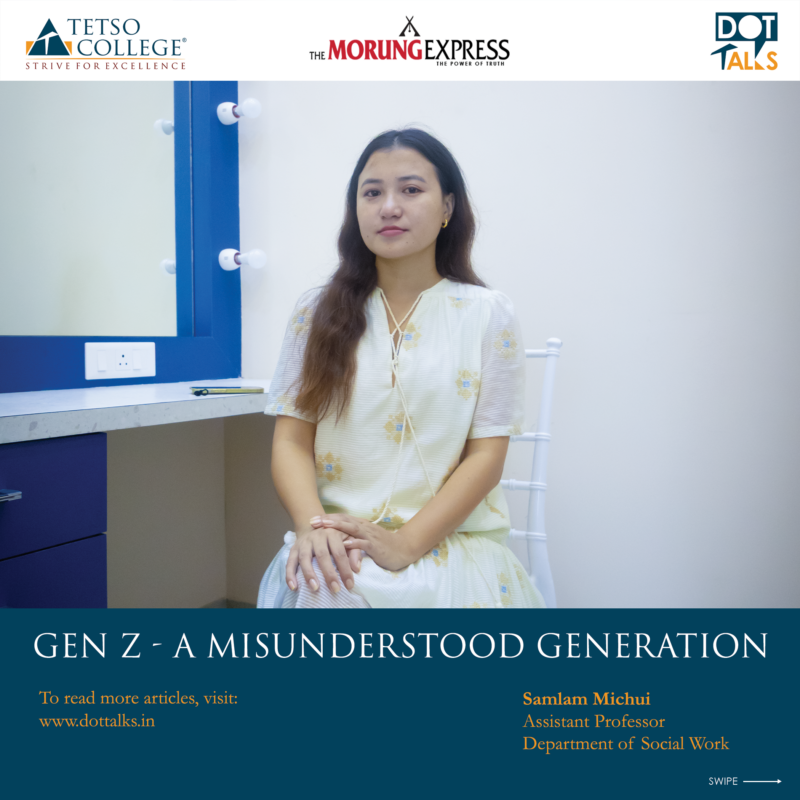
Generation Z is often portrayed as entitled, selfish, disrespectful, and overly sensitive. Such labels dominate conversations in classrooms, workplaces, and even within families. Yet these characterisations often overlook a fundamental sociological principle: generations are products of the historical, economic, and cultural conditions in which they are raised. Rather than asking why Generation Z behaves differently, perhaps we should ask whether they are simply responding differently to a world that Millennials worked hard to create for them.
Millennials grew up during a period of profound social and economic transition. Many were raised by parents and grandparents whose lives had been shaped by poverty, limited educational opportunities, rapid social change, and the constant pursuit of stability. As a result, discipline, obedience, and perseverance became central values within families and educational institutions. Respect for authority was rarely questioned, and success was often measured by one’s willingness to endure hardship without complaint.
For many Millennials, resilience meant survival. They learned to remain silent when criticised, accept unfair treatment, and prioritise collective expectations over personal aspirations. Failure was not viewed as a learning experience but as a disappointment to one’s family. Expressions such as “I can’t” or “I don’t want to” were rarely accepted because perseverance was considered the only path toward a better future. Career choices were similarly influenced by family expectations and economic security rather than personal fulfillment. Compliance was not always a sign of agreement with the system; often, it reflected the high social and economic cost of resisting it.
It is therefore unsurprising that Millennials sought something different for the next generation. As parents, teachers, siblings, mentors, and community members, they wanted young people to experience greater opportunities, healthier relationships, and more freedom than they themselves had known. In many ways, Generation Z represents the outcome of those aspirations.
Unlike previous generations, Generation Z has grown up witnessing not only the successes of Millennials but also the emotional costs of constant sacrifice. They have observed burnout, workplace exploitation, and the consequences of prioritising obedience over well-being. Consequently, many members of Generation Z are more willing to establish boundaries, question authority, and advocate for their rights. These behaviours are frequently interpreted as entitlement or disrespect. However, they may instead reflect a generation that has been encouraged to think critically and value personal dignity.
This shift is supported by research on generational development. Psychologist Jean Twenge argues that younger generations increasingly value autonomy, self-expression, and personal fulfillment, reflecting broader cultural changes rather than simply declining moral standards. Similarly, developmental psychologist Jeffrey Jensen Arnett suggests that greater self-focus among emerging adults should be understood within the context of longer educational pathways, changing labour markets, and evolving definitions of adulthood, rather than dismissed as narcissism or selfishness.
Generation Z’s willingness to challenge authority also reflects changing understandings of civic participation. They are more likely to question practices they perceive as unfair, refuse unreasonable demands, and speak openly about issues such as mental health, workplace equity, and social justice. Respect, from their perspective, is not automatically granted because of age or hierarchy but is earned through fairness, competence, and mutual understanding. While this approach may appear confrontational to older generations, it also reflects an increased awareness of individual rights and democratic participation.
Recent youth-led demonstrations at Jantar Mantar illustrate this changing mindset. Regardless of one’s position on the issues being protested, such movements reveal a generation prepared to risk academic, professional, and personal aspirations in pursuit of systemic change. Rather than remaining silent in the face of perceived injustice, many young people view civic participation as both a right and a responsibility. Their activism demonstrates that commitment to social change extends beyond online discussions into tangible public engagement.
This does not mean that Generation Z is without shortcomings, nor does it imply that Millennials had all the answers. Every generation develops strengths in response to the challenges it inherits. Millennials demonstrated remarkable endurance in navigating uncertainty and responsibility, while Generation Z increasingly demonstrates the courage to question systems that previous generations felt compelled to accept. These are not opposing values but different expressions of resilience.
Perhaps, then, the real question is not whether Generation Z is entitled, but whether our understanding of resilience has failed to evolve. Millennials often survived by enduring hardship; Generation Z increasingly seeks to transform the conditions that create it. If one generation taught itself to endure, the next has learned to speak. Rather than criticising that difference, society may do better to recognise it as evidence of progress. After all, raising children who can demand the dignity that their parents could only hope for may be one of the greatest successes of the Millennial generation.